Confused resident tries to leave the building: what to do before they reach the door
A real r/cna scenario about a dementia resident who keeps walking toward the exit and once made it to the parking lot. What's an elopement, what to do in the moment, and how to prevent the next attempt.
A CNA on r/cna posted this:
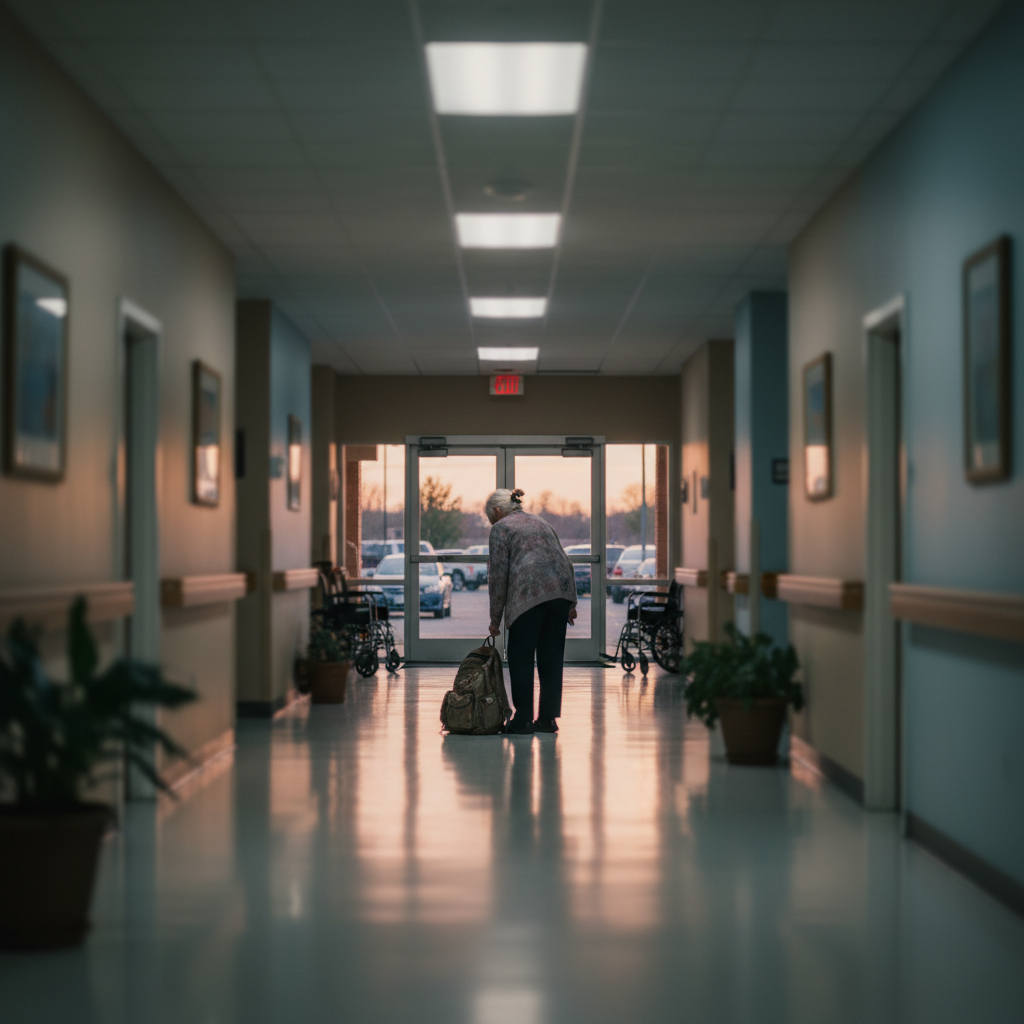
I work nights on a memory care unit. We have a resident, mid-stage dementia, who is FIXED on leaving. She packs a bag every shift, walks the halls saying she needs to "get to the bus." Last week she made it out the front door — a visitor brought her back. My charge nurse basically said "just keep an eye on her." I have 14 other residents. What am I supposed to do?
This post got 612 upvotes and 180+ comments. It is one of the highest-stakes things a CNA deals with on a memory care unit, and the answers are not obvious. Here's what's actually going on, what to do in the moment, and how to prevent the next attempt.
First: what "elopement" means and why it matters
Elopement is when a resident who is unable to safely leave the facility on their own gets out — or gets far enough toward getting out that staff have to intervene. The legal and clinical threshold is the resident's ability to recognize danger and direct themselves safely. A resident with mid-stage dementia who is "trying to get to the bus" cannot direct themselves safely. If she makes it to the parking lot, into a car, or off the property, that is an elopement.
Why facilities care so much:
- It is a CMS-tagged event. An unwitnessed elopement, or one that results in injury, can trigger immediate jeopardy findings and state survey citations.
- The resident is at serious risk. A confused person in a parking lot, on a road, or in weather they are not dressed for can die.
- You are the one whose name is on the assignment sheet. If the post-event investigation finds that staff knew the resident was an elopement risk and did not escalate, the CNAs on shift are part of that finding. Not because you're a bad CNA — because the facility failed to put safeguards in place, and you were the only person standing between the resident and the door.
This is not a "wait and see" situation. It is a "raise it now, in writing" situation.
What to do in the moment (resident heading for the door)
If you see a confused resident moving toward an exit — front door, side door, fire door, even a window that opens:
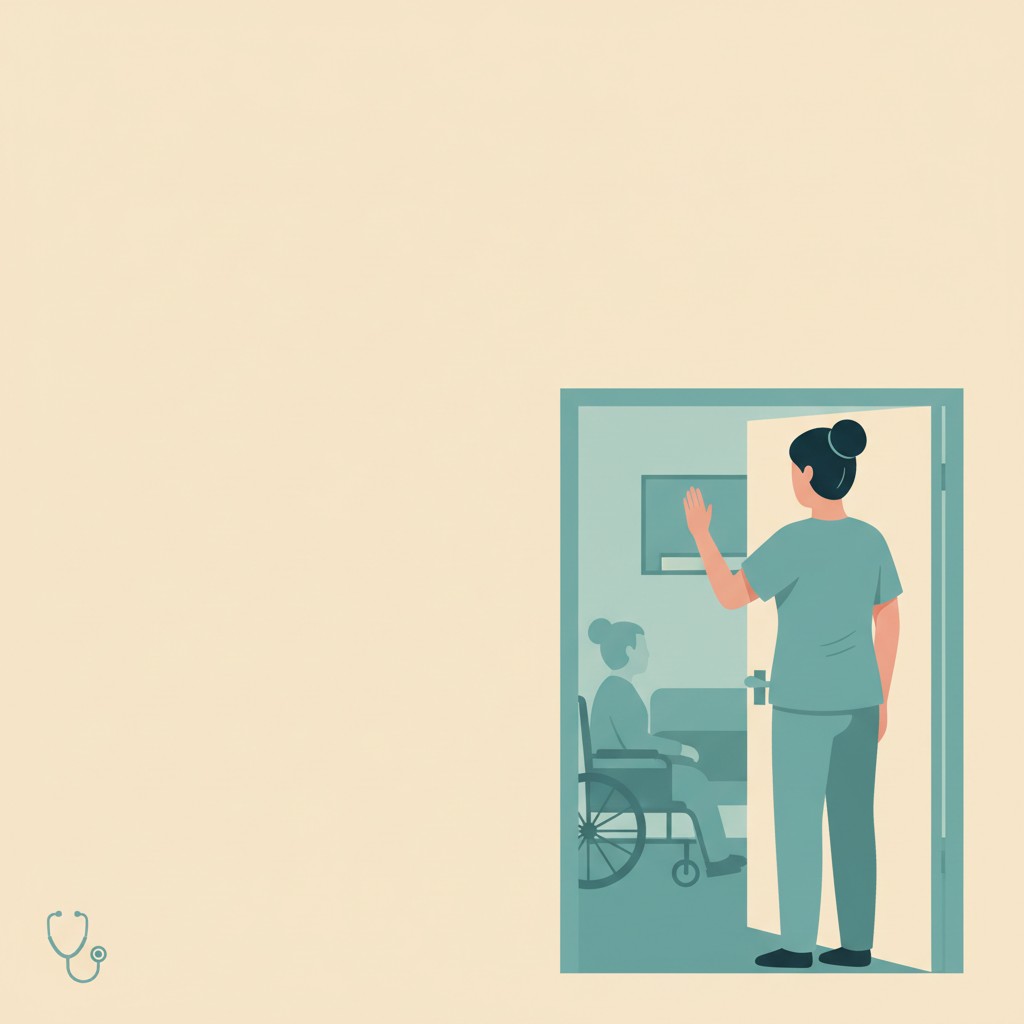
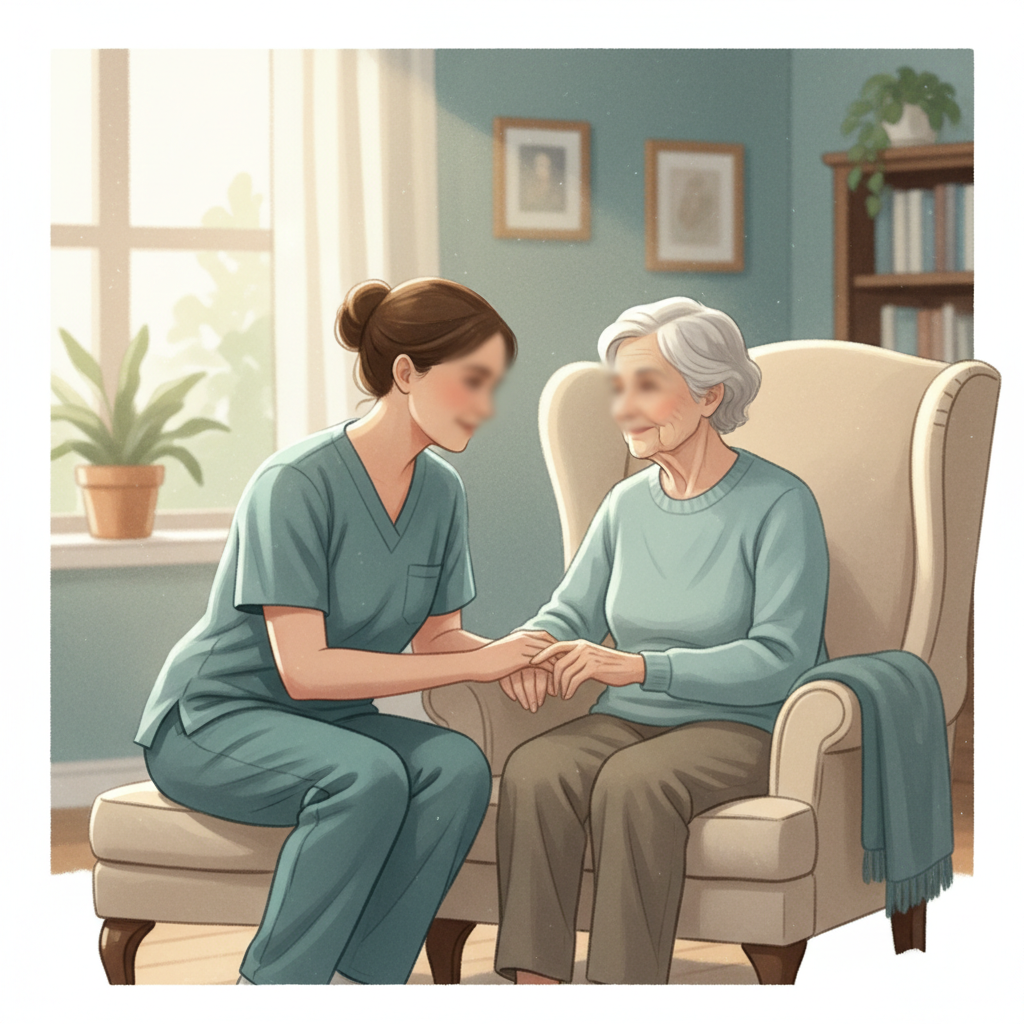
1. Walk with them, do not block them. A confused resident who is blocked or grabbed will panic, escalate, and may push past you. Walk alongside them. Match their pace. Talk to them about the bus. Where is the bus going? When is it coming? You are not lying — you are entering their reality for the thirty seconds it takes to redirect.
2. Use the "agree and redirect" approach. "Let's go find out when the bus comes" — and walk them toward the nurses' station, the activity room, or anywhere away from the door. Reorientation rarely works in the moment. Telling a dementia patient "you live here" just creates an argument you cannot win.
3. If they are past the point of redirect — already through the door, or running — call for help immediately. Do not chase alone. You are not trained to physically redirect a fleeing dementia patient by yourself, and if you tackle them and they fall, that is a serious injury and a lawsuit. Yell. Hit the call light for the unit. Pull a fire alarm only if your facility's protocol is to do so for elopement — most are not.
4. Once the resident is safe, document the time, what they were doing, what they said, where they were when you reached them, and what you did. This is the paper trail that protects everyone.
The thing the original poster is missing
The charge nurse's response — "just keep an eye on her" — is the wrong answer. It is the answer of a facility that has not yet accepted that this resident needs a different level of intervention than one CNA with 14 other residents can provide.
What should happen, and what you should be pushing for:
1. A formal elopement risk assessment and care plan update. Most facilities use some version of a wander-risk score. If the resident is packing a bag, walking the halls, and has already gotten out once, she is a documented elopement risk. The care plan needs to reflect that. If it's not in the care plan, ask why.
2. A wander-guard or door alarm. Memory care units typically have delayed-egress doors that alarm when a resident approaches. If your unit does not, the resident should at minimum be wearing a wander-guard bracelet that triggers an alarm at the exits. If neither exists, that is a facility-level safety failure, and you are the one who has to live with it on shift.
3. A 1:1 or closer observation level. If a resident is actively eloping, the staffing assignment needs to reflect that. "Keep an eye on her" while you have 14 other residents is not a care plan — it's a liability disclaimer. If the facility will not adjust the assignment, that is a documentation problem waiting to happen.
What you can do this shift, today
You cannot fix the staffing problem. You cannot install a wander-guard. But you can do these things:
- Document every elopement attempt in detail. Time, what the resident was doing, where they were when you reached them, what you said, how long the redirection took. If you were in another room and could not respond, document that too — "at 0245 resident was observed in hallway walking toward exit; redirected to activity room; I was providing incontinence care to Room 14 at the time, response time approximately 90 seconds."
- Tell the nurse in writing. Not just verbally. A note in the chart, an email, a text if that's how your facility communicates. "Resident [name] attempted to exit through the front door at [time]. Redirected. This is the third time this week. I am concerned we do not have adequate safeguards."
- Tell the unit manager or DON if the nurse does not act. Most facilities have a chain for this. Use it. The CNA who does not escalate is the CNA whose name is in the incident report later.
- Know your facility's elopement protocol. Where are the wander-guard alarms? What is the code word? Which exits are alarmed? Which are not? If you don't know, ask in your next shift huddle. This is not optional knowledge on a memory care unit.
What NOT to do
- Do not physically restrain a fleeing resident by yourself. A dementia patient who is running for the door and gets tackled will hit the floor, and you will be named in a lawsuit. Get help.
- Do not lie to the family about how often this is happening. If the family is calling daily and you tell them "she's doing great," you are setting up a massive problem the first time she makes it off the property.
- Do not assume it won't happen on your shift. "She's been fine for three days" is what people say right before the elopement. The pattern is unpredictable. That is the whole point.
- Do not accept "just keep an eye on her" as a care plan. It is not one. It is a placeholder for one. If the real care plan is not in place, you are working without one, and that is unsafe for the resident and for you.
If it happens anyway
If the resident makes it out, your priorities in order are:
- Resident safety — get them out of harm's way
- Activate the elopement protocol — call the code, alert the front desk, call the facility phone tree
- Document everything you saw, in real time if possible
- Cooperate with the investigation afterward, factually and without blaming other staff
The investigation will ask what you knew, what you documented, and what you escalated. The CNAs who come through investigations well are the ones who have a paper trail showing they raised the issue and were not heard. Make the waves. In writing.
The full ExamReady CNA clinical skills library walks through redirection, de-escalation, and elopement response step-by-step with critical-step tracking — see the elopement and wander-risk skills module for the breakdown you'll use on shift. The same scope-and-voice approach as this post, with the actual exam and clinical tools attached.
If this kind of post is useful, the full ExamReady library has 1,500+ practice questions, clinical skills with critical-step tracking, and an AI tutor that explains every answer — the same scope-and-voice approach as these posts, with the actual exam tools attached. A 7-day free trial gets you the whole thing, no card required.